
Crisp mornings, longer drives, and often spectacular sightings.
There is a clarity to winter at Kwandwe. The air carries a crisp edge in the early hours, and the light arrives slowly, spilling gold across a landscape that feels both expansive and finely detailed. The greens have shifted to warmer tones, with oranges and yellows softening the landscape, and the light holds longer than it does in summer, giving everything a gentler finish, almost as if the landscape is setting the scene for you, waiting for the moment to be captured.
The day starts simply. It would be easy to stay in bed, watching the sun rise with a steaming cup of coffee, seeing wildlife unfold from the comfort of your room. But something pulls you out. The reward feels greater somehow, being part of it rather than watching from afar. There’s a sense of anticipation in that moment, a mix of excitement and calm that’s hard to explain, but easy to feel.
Coffee in hand, the sky begins to shift, soft winter colours moving through oranges and pinks. Standing on the deck with your guide, you start to hear the bush come alive around you. Breakfast follows naturally. Fresh fruit, warm breads, and something cooked to order. Enough to ease you into the morning without slowing it down.
Before heading out, there’s a conversation with your guide. Nothing formal, just a sense of what you’re in the mood for. Sometimes there’s a plan. Sometimes it’s just a direction.
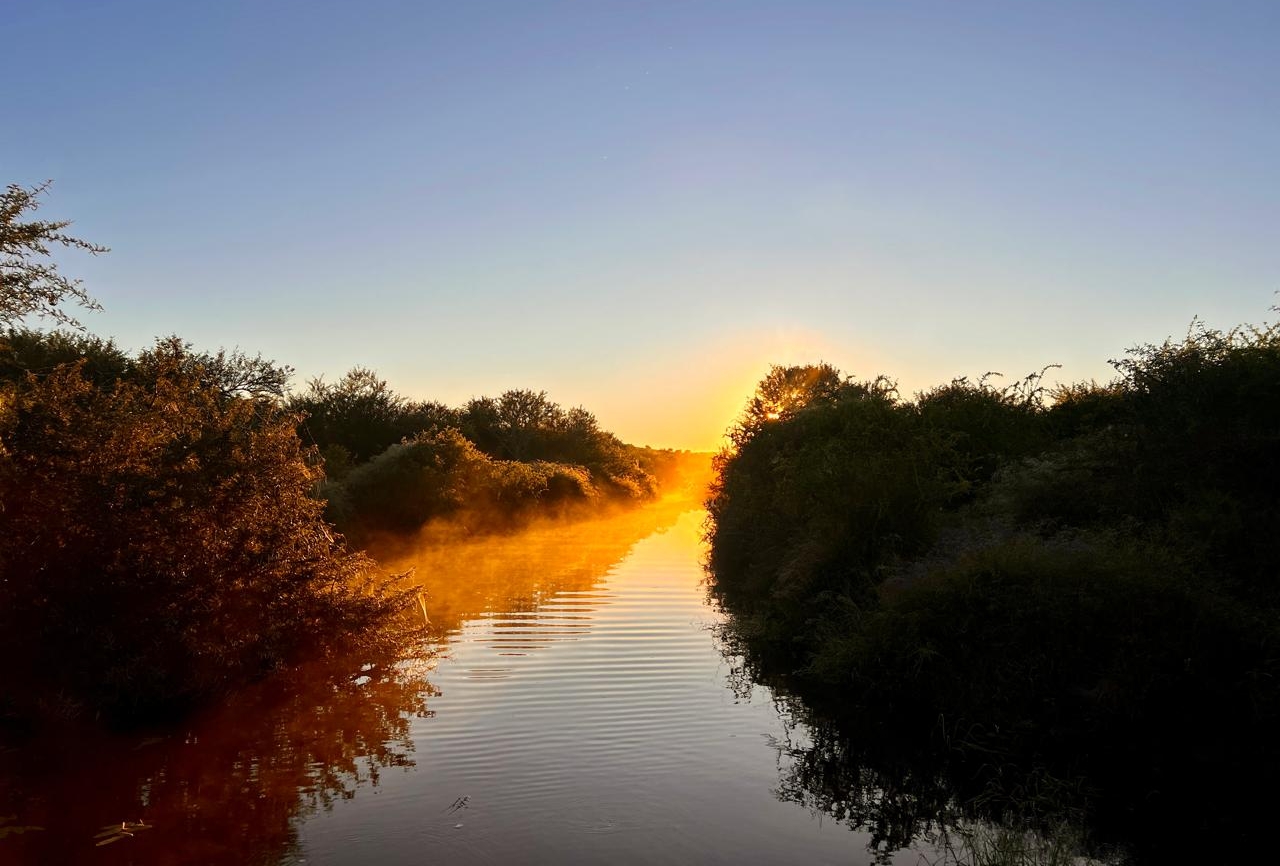
The guides often say a misty morning promises a good day. As you drive out, it’s easy to believe them. The landscape is layered with mist lying low along the river, softening everything. Shapes move through it slowly, appearing and disappearing just as easily. You find yourself leaning forward slightly, not wanting to miss anything.
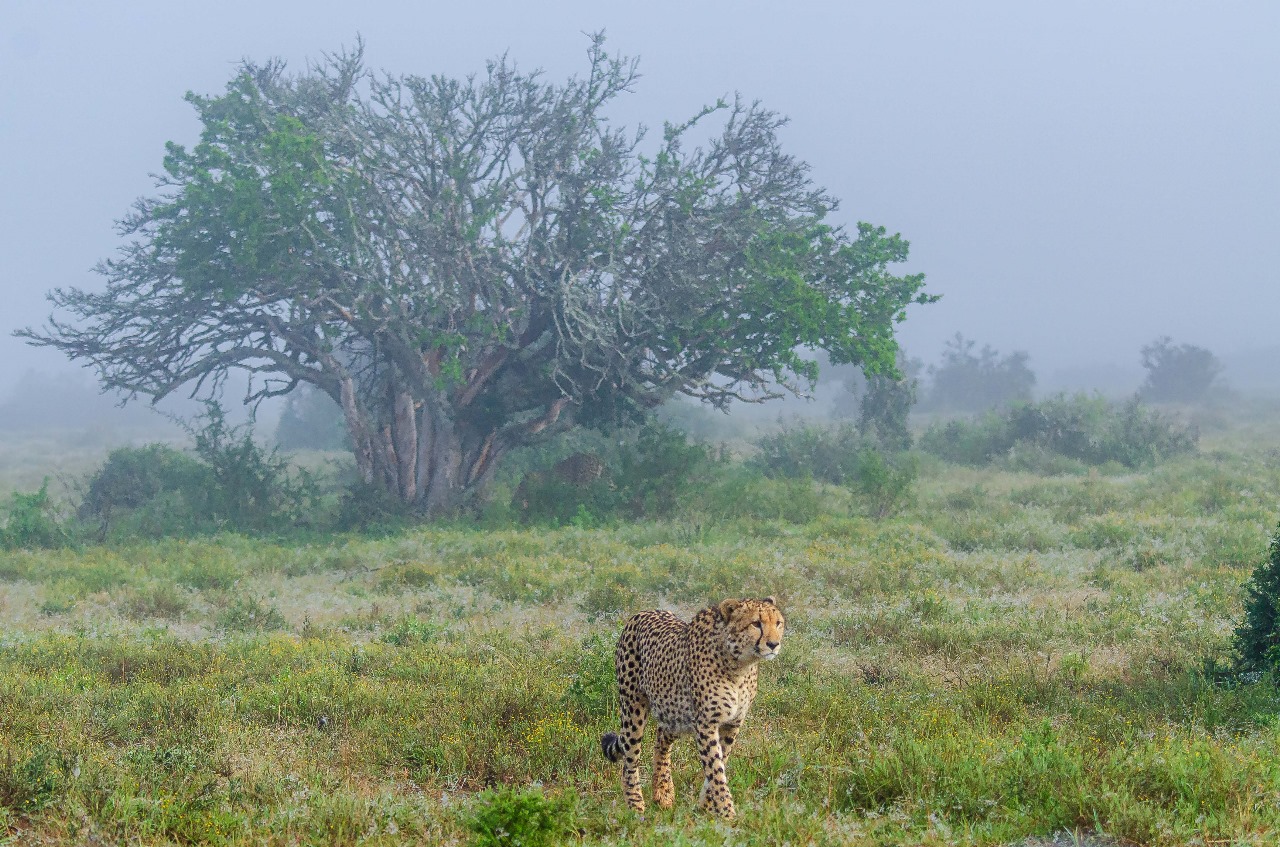
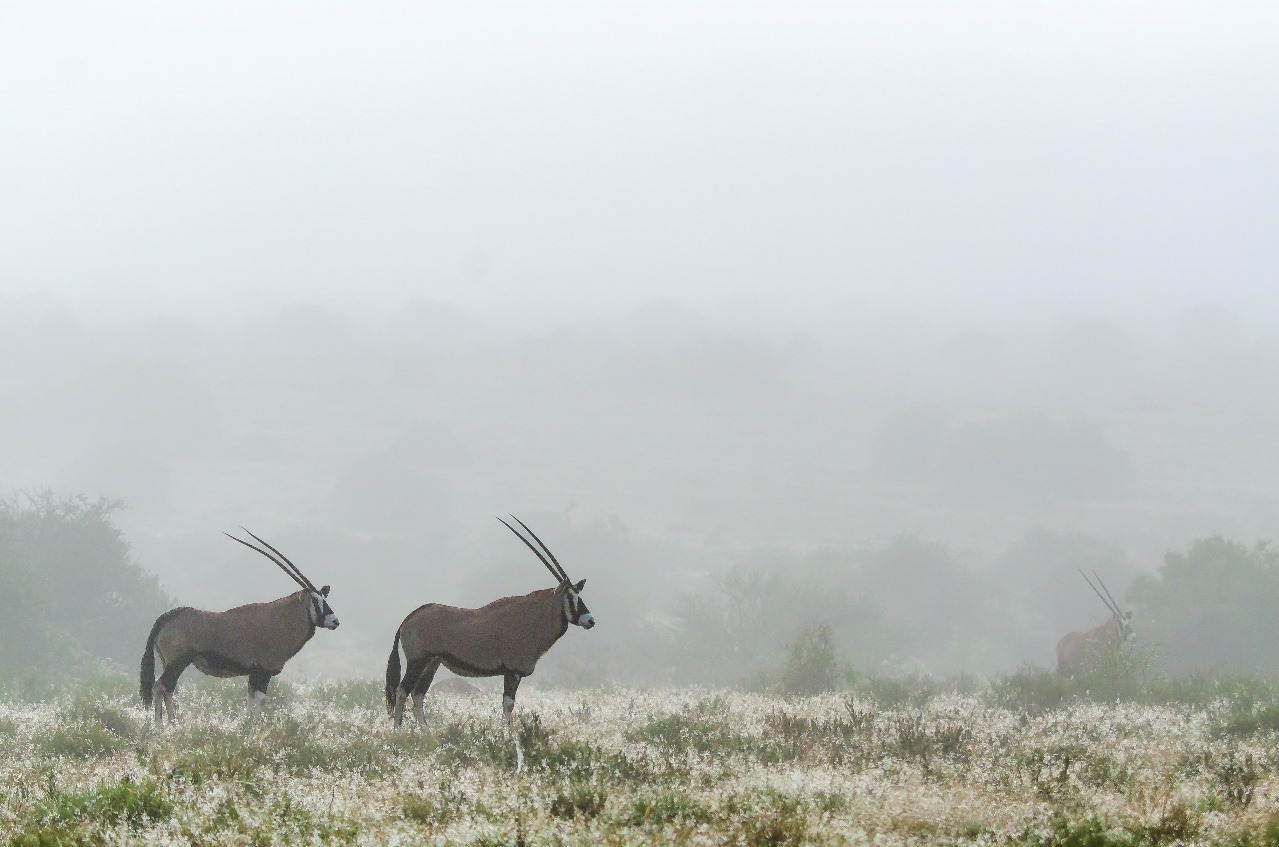

As you move through the reserve, you become aware of the skill around you. The guide and tracker speak easily, almost in passing, about individual animals, where they were last seen, what they might be doing, and where they could be heading. There’s a familiarity to it, but also a deep respect. Nothing feels chased. It feels earned. The bond between them is clear, easy and instinctive, built over time and shared experience, working together with an understanding that rarely needs words.
Sliding to a gentle stop, the moment arrives almost unnoticed. The Fort Dam female leopard is seen at first light, moving steadily along the river, scent-marking as she goes. There’s no rush to follow, just a sense of staying with her, watching the small decisions she makes. She disappears into the thicker bush for a time, and you wait. The alarm calls of monkeys carry across the riverbank, sharp in the cold air. When she reappears, it’s softer somehow. She calls low, almost under her breath, before settling. Then, slowly, a cub appears. You watch as they find each other, the moment unfolding without interruption.
Winter gives you time like that.
You start to notice how far sound travels in the cold. Often, you hear something before you see it. Alarm calls and bird chatter carry clearly across the valley, and when a lion calls, it feels closer than it should. Sometimes, in the distance, you can even see their breath as they call, each exhale briefly visible in the air.
As the morning stretches, the landscape opens up. A herd of buffalo gathers at a waterhole, the movement slow and deliberate as they come in to drink. Steam lifts faintly from their bodies in the cool air.
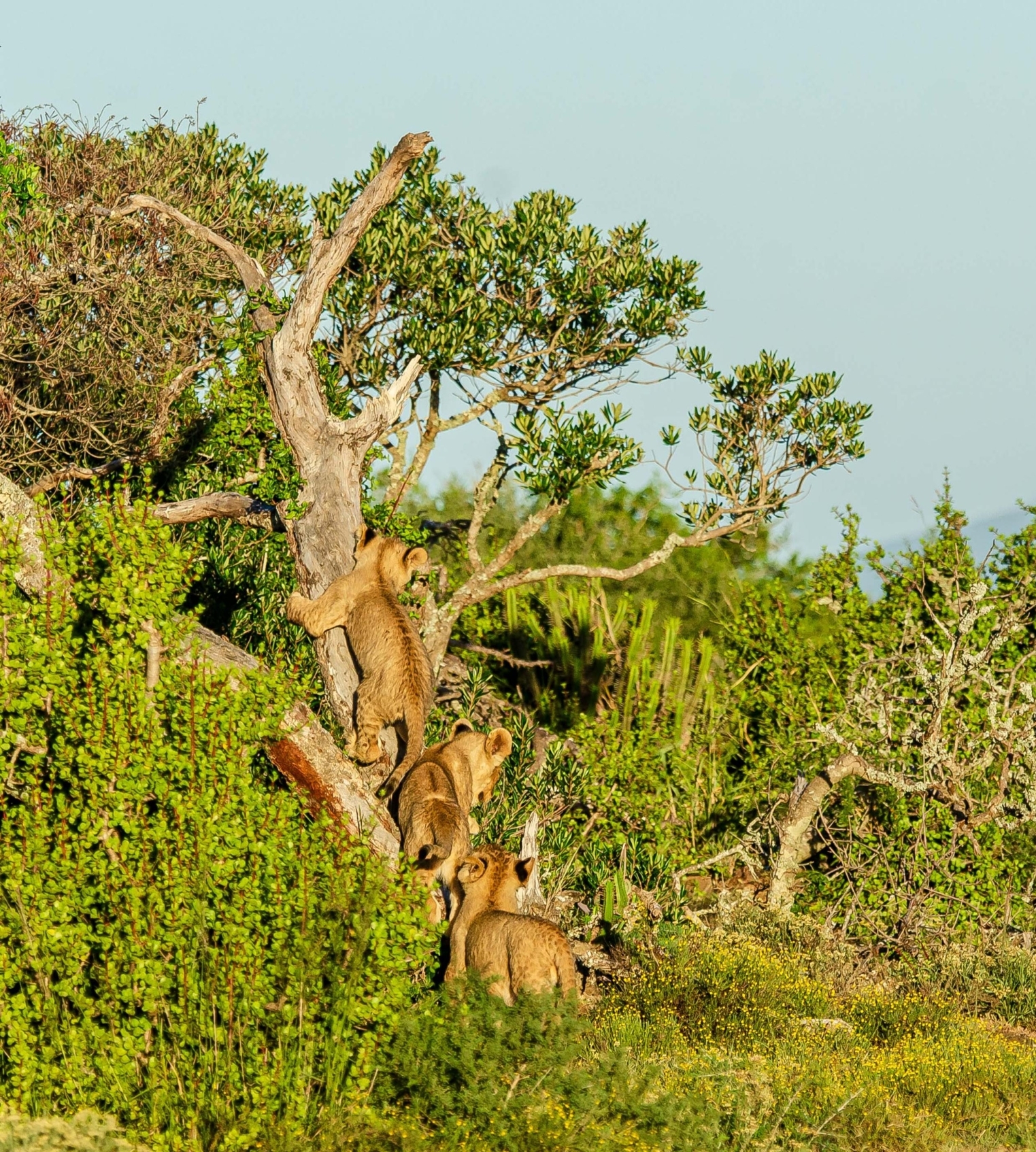
There are lighter moments, too. A small group of lion cubs moves through the grass, playful and completely absorbed in their own world, tumbling over each other while the rest of the pride rests nearby. You don’t feel the need to move on.
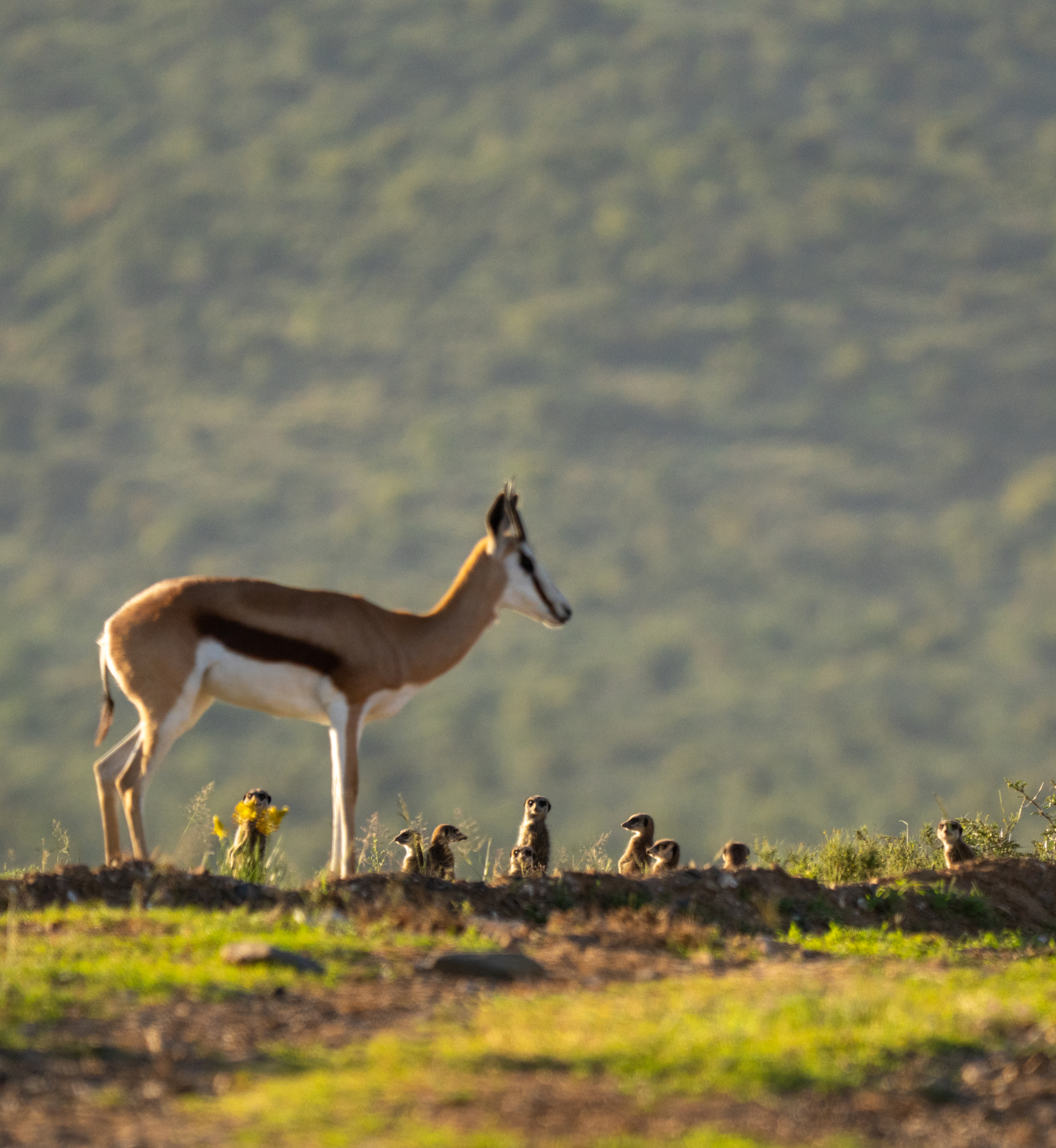
A burrow of meerkats stands with their bellies turned to the sun, lined up as if each has claimed their own piece of warmth. They follow you with their eyes, then their heads, but their bodies remain fixed to the rising heat.
Back at the lodge, the middle of the day is yours. Lunch comes and goes easily. Seasonal, unfussy, exactly what you feel like.
The day opens up from here. Some choose to rest, settling into the warmth of the winter sun and letting the morning linger a little longer, taking it in before heading out again as dusk approaches. Others choose to change pace with a guided bush walk, where the pace shifts entirely. Tracks, broken stems, and the smallest changes in the landscape begin to tell a story of what passed through before you. It’s the kind of detail that was always there, just not yet seen.
For those heading out on a full afternoon drive, the rhythm and the appeal of a winter safari become clear. Without the pressure of heat, animals don’t retreat into the shade where they disappear from view. They remain out in the open for longer, moving, feeding, and interacting. It changes everything. Sightings are not rushed or fleeting. You spend time with them, watching behaviour unfold in a way that feels uninterrupted, almost ancient.
In certain areas, that sense of history runs deeper. Tucked into the rock, you come across old paintings, some dating back hundreds, even thousands of years. Scenes of hunting, figures moving across the same landscape you’re standing in now. Standing where others once stood barefoot, it shifts your sense of time.
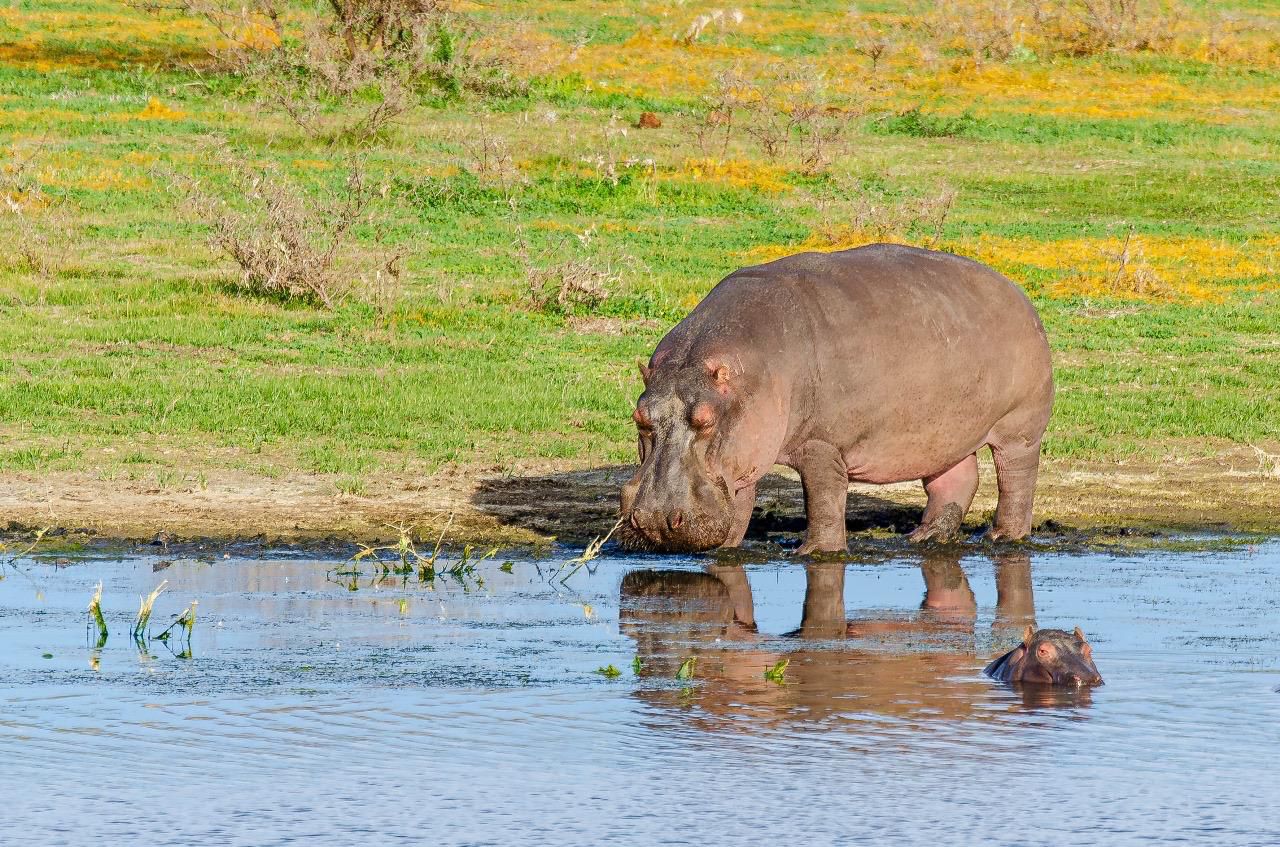
Around a bend near Fort Dam, a black rhino reveals itself, moving with purpose, completely unbothered by the hour. In winter, they are often active in the open, even through the middle of the day. Not far off, a hippo lies out of the water, stretched into the warmth of the sun, its full size impossible to ignore and a wonder to appreciate.
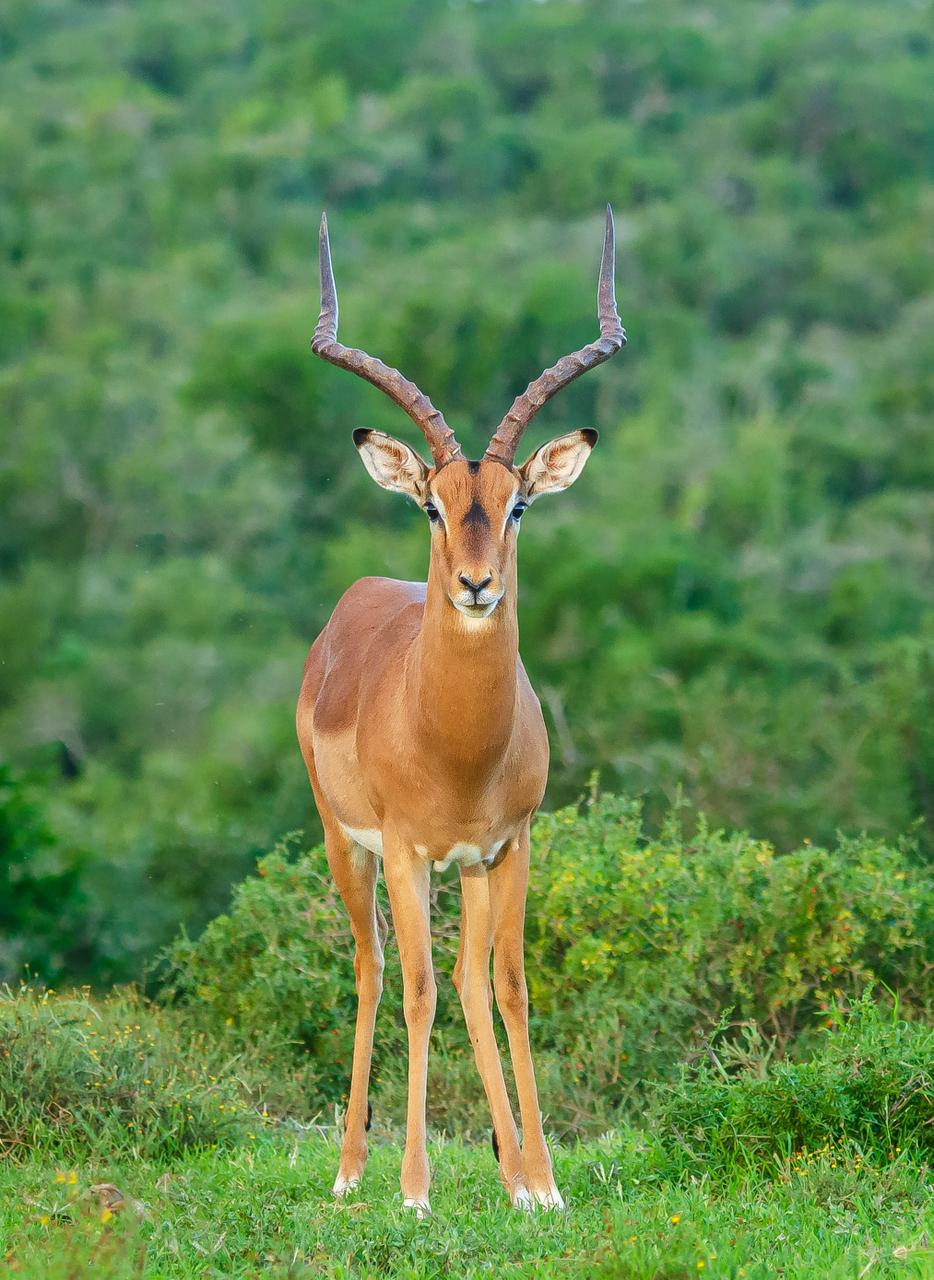
As the afternoon begins to settle, the drive naturally extends into the evening. The light begins to soften, and with it, everything shifts again. An impala ram stands alert, marking territory as the rut begins to take hold. Not far away, a cheetah cub moves almost invisibly through the dry grass, pausing often, instinct already shaping how it survives.
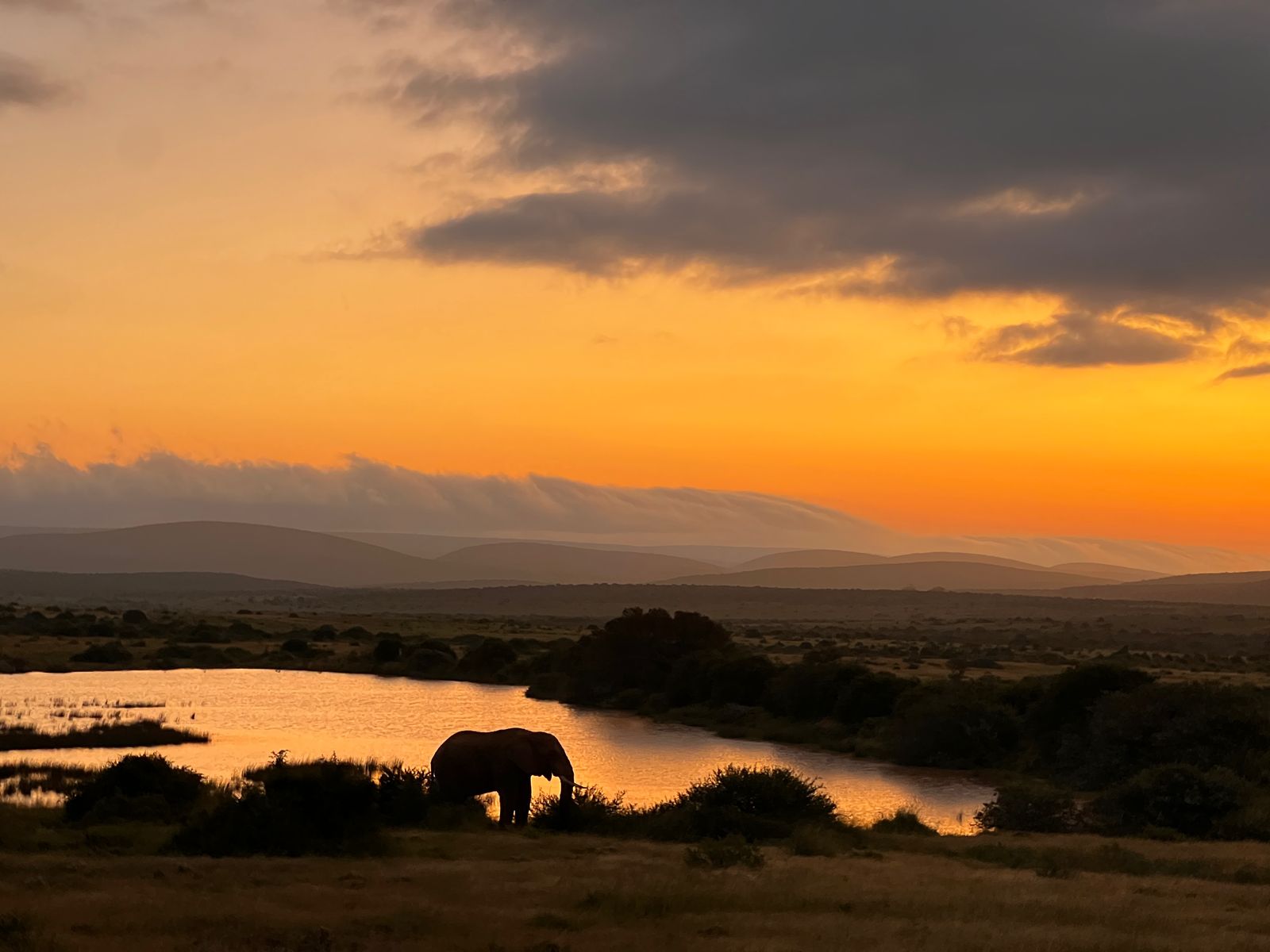
As the sun begins to set, the sky becomes a spectacular canvas, the landscape drawn into a kind of light that feels unlike anything you’ve seen before, holding your attention without asking for it. Unfolding as part of this moment, a lion and lioness lie together on a rise, silhouetted against the fading light. It’s one of those scenes that needs nothing more. Then the stillness breaks with the low, rolling sound of a lioness calling, the sound travelling far into the cooling air.
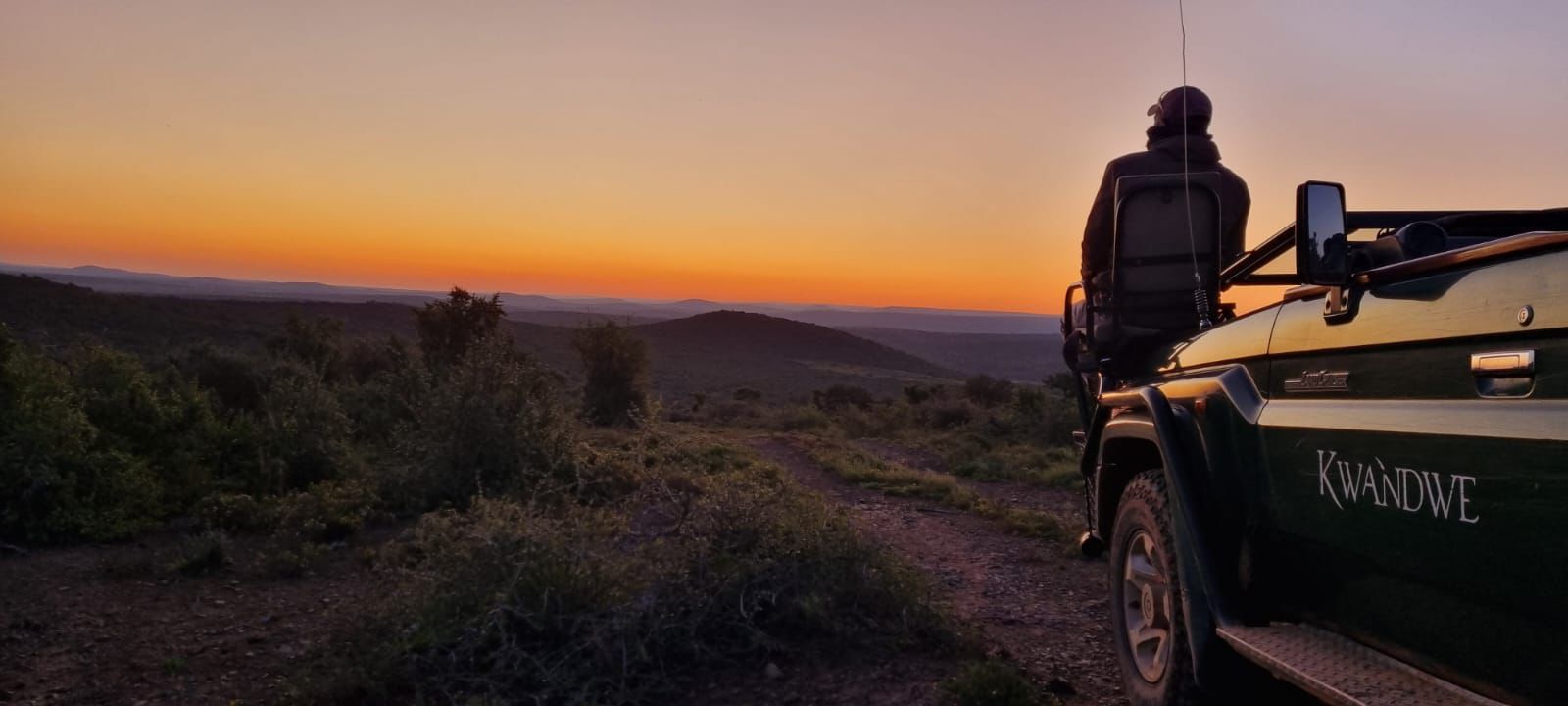
You pause here for sundowners. Drinks are poured, and conversation comes easily as the day is revisited, each moment finding its place. There is no rush. The light fades slowly, and you linger a little longer before setting off again.

The drive continues into dusk. As the last of the light fades, movement continues. An aardwolf crosses the open ground, a bat-eared fox pausing briefly before slipping away. The temperature drops quickly, and the shift into night comes faster than expected.

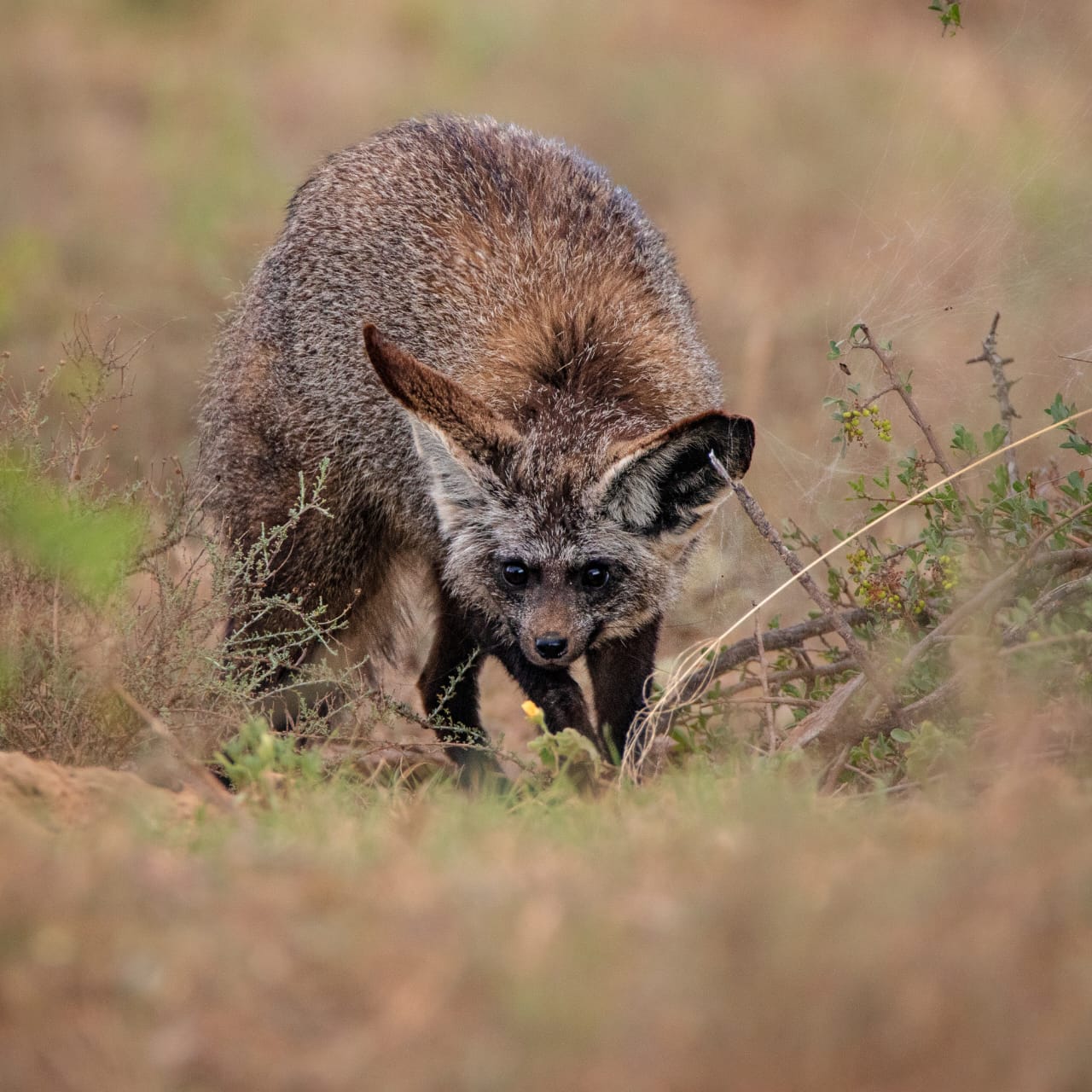
By the time you return, the cold has settled in properly.
Fires are lit, and dinner follows in that easy way that evenings do here. The food is warm and generous, exactly what you want at the end of a day like this. Conversation drifts, or doesn’t. Both feel right.
Later, if you step outside, the night opens up. The air is clear, the sky deep and uninterrupted. Stars sit sharp and bright, and the Milky Way stretches across it in a way that feels almost within reach. You can stand there for a long time without saying anything.
What stays with you isn’t any single sighting. It’s how the day unfolds without feeling planned. One moment leading into the next, each one given the time it needs.
Winter has a way of doing that. It gives you space, like a blank canvas, and every experience gradually adds colour to it.
Plan Your Visit
For further information, please contact our reservations team at reservations@kwandwe.co.za