
At this time of year, the Blue Cranes begin to make their presence felt across Kwandwe. Their calls carry over the grasslands, and pairs and small flocks return to familiar ground. It is a welcome sight, but one that carries a deeper significance. Kwandwe means ‘Place of the Blue Crane’, and these birds have always held a special place here.
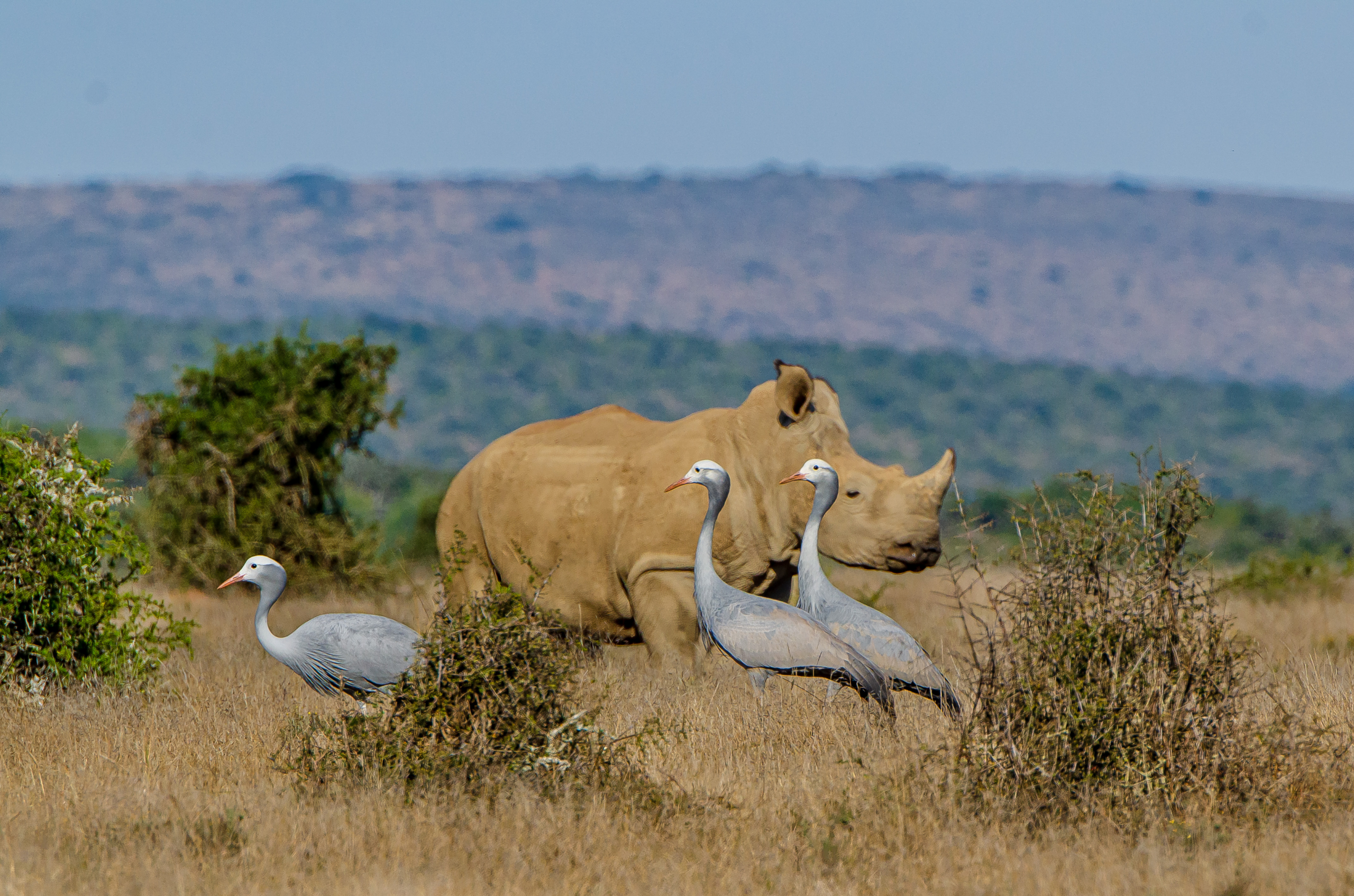
Yet there is more to their story than the pleasure of watching these magnificent birds soar overhead, their low, resonant calls rising into a chorus of ringing notes as they descend onto the grasslands.
While we have had a few pairs overwinter here over the last two or three years, they are far more prevalent in the summer months, when we see them breeding. Some pairs are returning to the same site they have used for several seasons, while others are in their first, looking for a partner and a suitable area to nest… and now more than ever, that is vital!
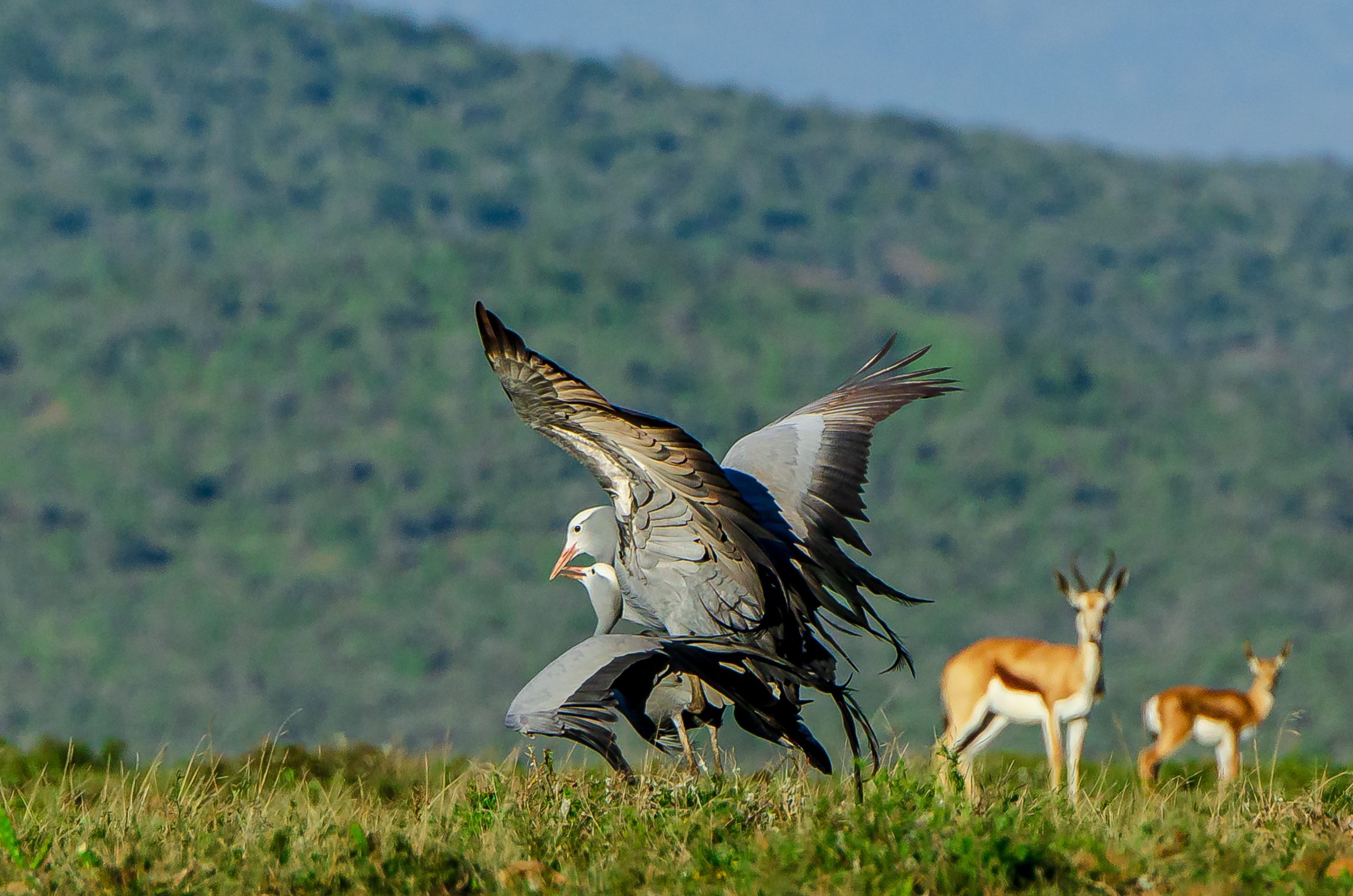
For a bird that has become such an important symbol of South Africa, it is surprisingly easy to forget just how special it is to see a Blue Crane in the wild. They are our national bird, and our namesake, but their story is becoming increasingly complicated.
Both the IUCN Red List and the Red Data Book of Birds of South Africa have placed the Blue Crane in the Vulnerable category in South Africa, reflecting a significant change in its fortunes over the past fifteen years. The national population is now estimated at between 34,000 and 68,000, although there is considerable uncertainty around that figure.
What is particularly interesting, though, is where those birds are found.
There are three main population centres: the Western Cape Overberg and Swartland region, the Central Karoo and the eastern grasslands, as well as a tiny, isolated population in Etosha in Namibia.
Kwandwe falls into the Central Karoo region.

The Western Cape holds the largest concentration, with the latest estimates putting the Overberg and Swartland population at roughly 31,500 birds. The Karoo comes next, with an estimated population of about 16,500, while the eastern grasslands account for around 4,000.
Those numbers are interesting, but here is some more context. Across the national population, numbers increased substantially between 2000 and 2010. However, counts have fallen by around 39% between 2010 and 2025.
Historically, the Central Karoo population was estimated at around 10,800 birds, representing roughly 30% of the population at the time. Older assessments considered the population stable, or perhaps even increasing slightly. Recent monitoring, however, suggests that Blue Crane numbers in the Central Karoo may also be declining, although the data here is less complete than in some other parts of the country.
Elsewhere, the decline is much clearer.
The Overberg area, which contains the country’s highest densities of Blue Cranes, has experienced particularly significant declines, losing 44% of its population between 2011 and 2025!
For Blue Cranes, the threats are varied. Power lines and wind turbines present a collision risk. Poisoning, including accidental poisoning associated with agricultural practices, can kill birds. Changes in land use can remove suitable habitat, while disturbance and poor breeding success can affect whether enough young birds survive to replace the adults that are lost.
The Central Karoo, and areas like Kwandwe, therefore have an important role to play.
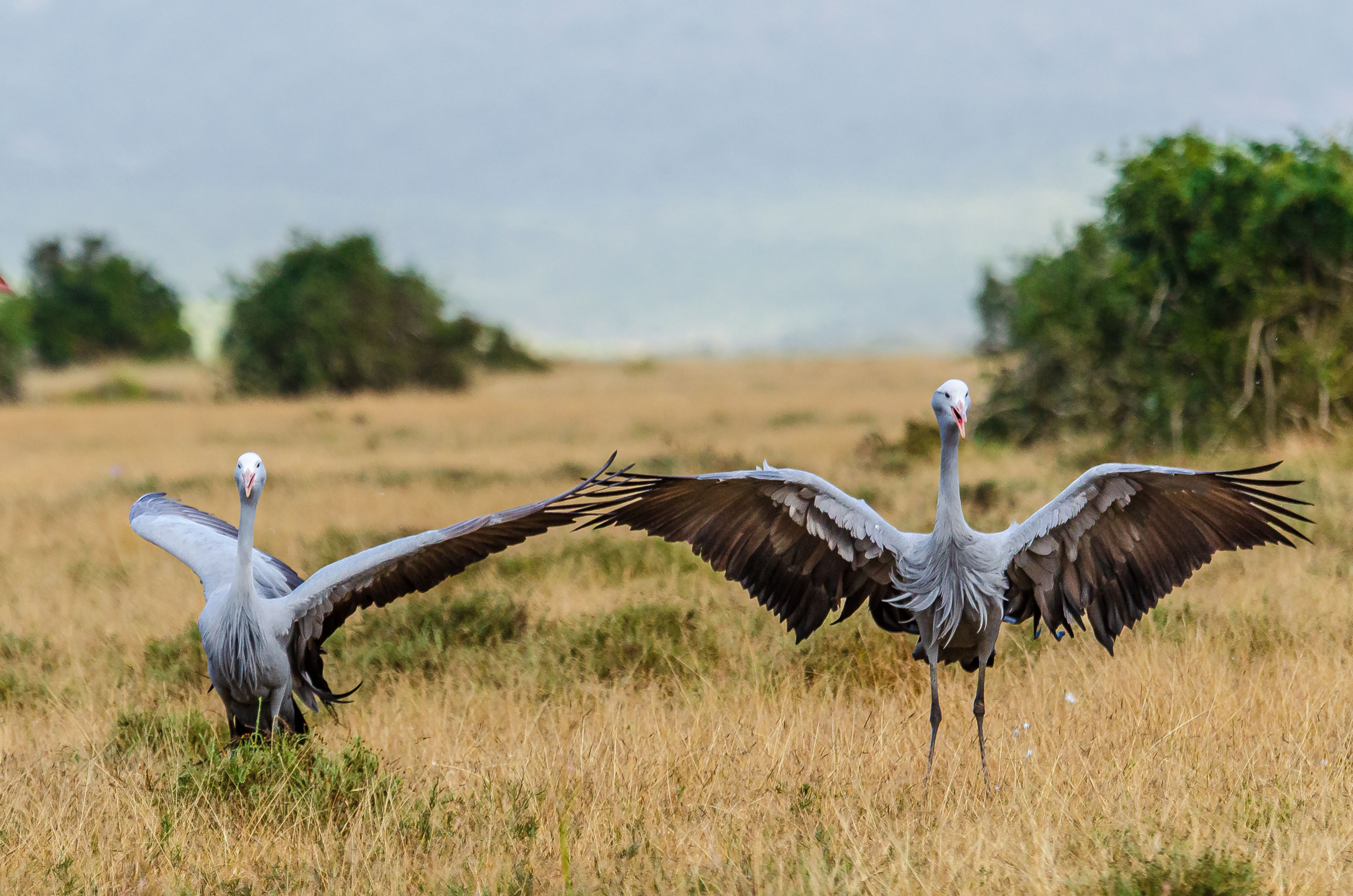
It is still one of the great strongholds of the Blue Crane, and protecting that population means protecting much more than a number on a population graph.
It means maintaining the open character of the landscape, understanding where cranes move and where they breed, working with farmers and landowners, identifying dangerous infrastructure and finding ways to reduce the risks.
And it means continuing to count them, even when the numbers appear reassuring, because conservation success is never something that can simply be ticked off on a list.
Populations recover.
We relax.
Threats change.
And suddenly the same species that seemed secure a few years ago needs our attention again.
Satellite tracking and long-term monitoring have helped conservationists understand how cranes use these landscapes, while conservation planning now brings together organisations, government agencies, landowners and infrastructure managers to address threats such as power lines, poisoning and habitat loss. Recent conservation planning identified dozens of specific actions needed to improve the species’ future.
But there is another reason why the Blue Crane matters, and it has nothing to do with population statistics.
In many cultures around the world, cranes are symbols of peace, gentleness, hope and longevity. For South Africans, the Blue Crane carries a cultural significance that reaches much further back than modern conservation.
Among Xhosa people, the Blue Crane is known as iNdwe, and its feathers were traditionally associated with honour and bravery. To be recognised with a Blue Crane feather was a significant distinction, and the expression ukuphakamisa iNdwe, “to raise the Blue Crane”, became associated with honouring someone for exceptional conduct.
It is a wonderful connection when you think about it.
A bird that has come to represent South Africa as a whole was also once used to recognise people who had demonstrated something worthy of honour.
And now, in a strange reversal, the bird itself needs us to demonstrate those same qualities.
Not courage in the dramatic sense, but the quieter sort.
The willingness to keep protecting something even when the immediate danger seems to have passed. The willingness to work with people whose livelihoods depend on the same landscape. The willingness to look at a flock of cranes in the distance and understand that what appears ordinary may actually be something increasingly precious.
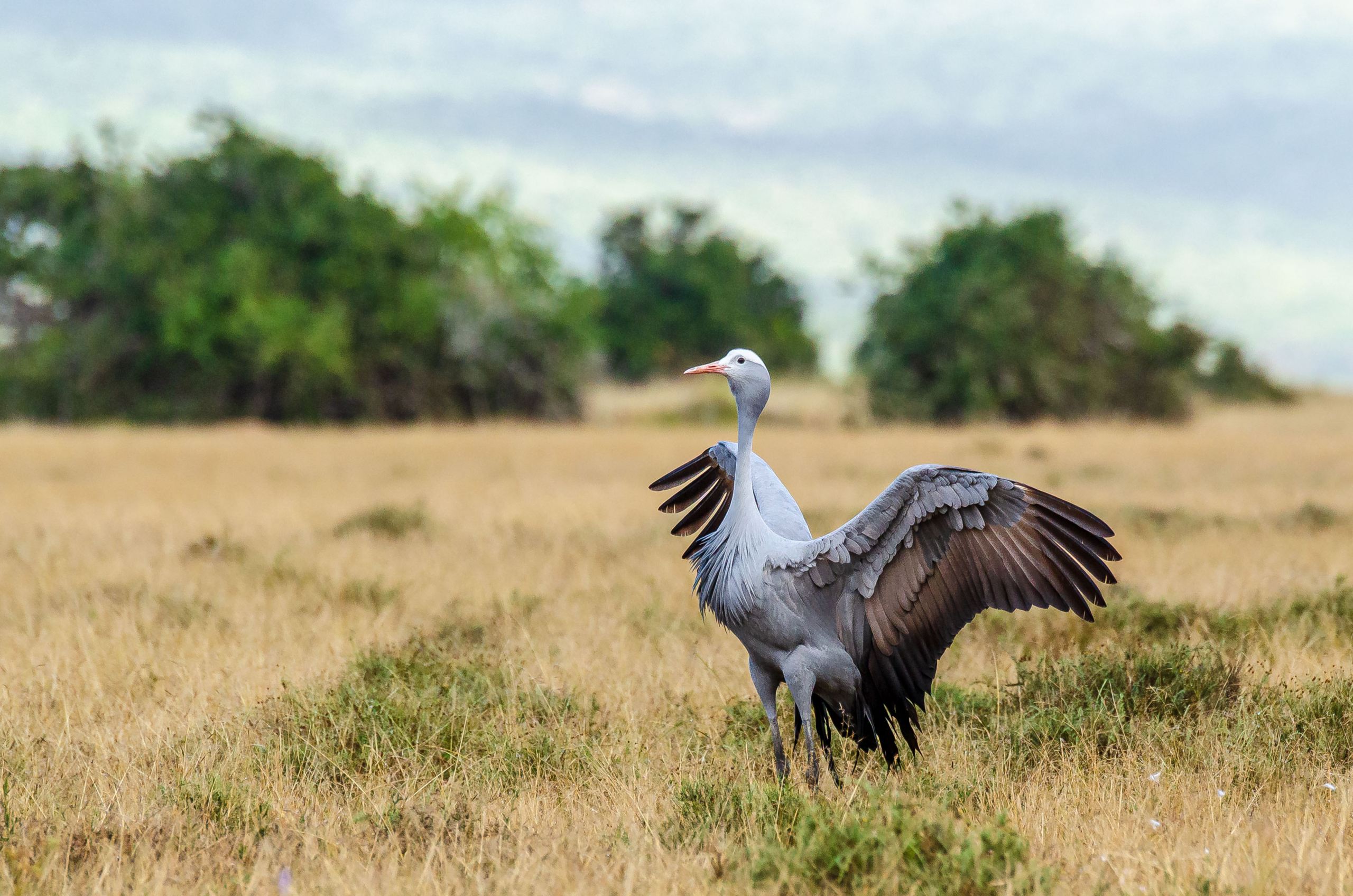
So, the next time you see Blue Cranes, stop for a moment. Watch them. Listen to them.

Look at the landscape around them.
Because perhaps that is the real significance of the Blue Crane.
It isn’t simply that we have chosen it as our national bird. It is that the bird and the landscape still belong together.
And keeping them together may be one of the most important things we can do for iNdwe.
🎥Senior Ranger Byron Sullivan on a wet winter, weavers nesting out of season, and the migrants arriving to a green Kwandwe this spring.
Source: BirdLife South Africa, Red Data Book of Birds of South Africa: Blue Crane. https://www.birdlife.org.za/red-data-book/red-list/blue-crane/